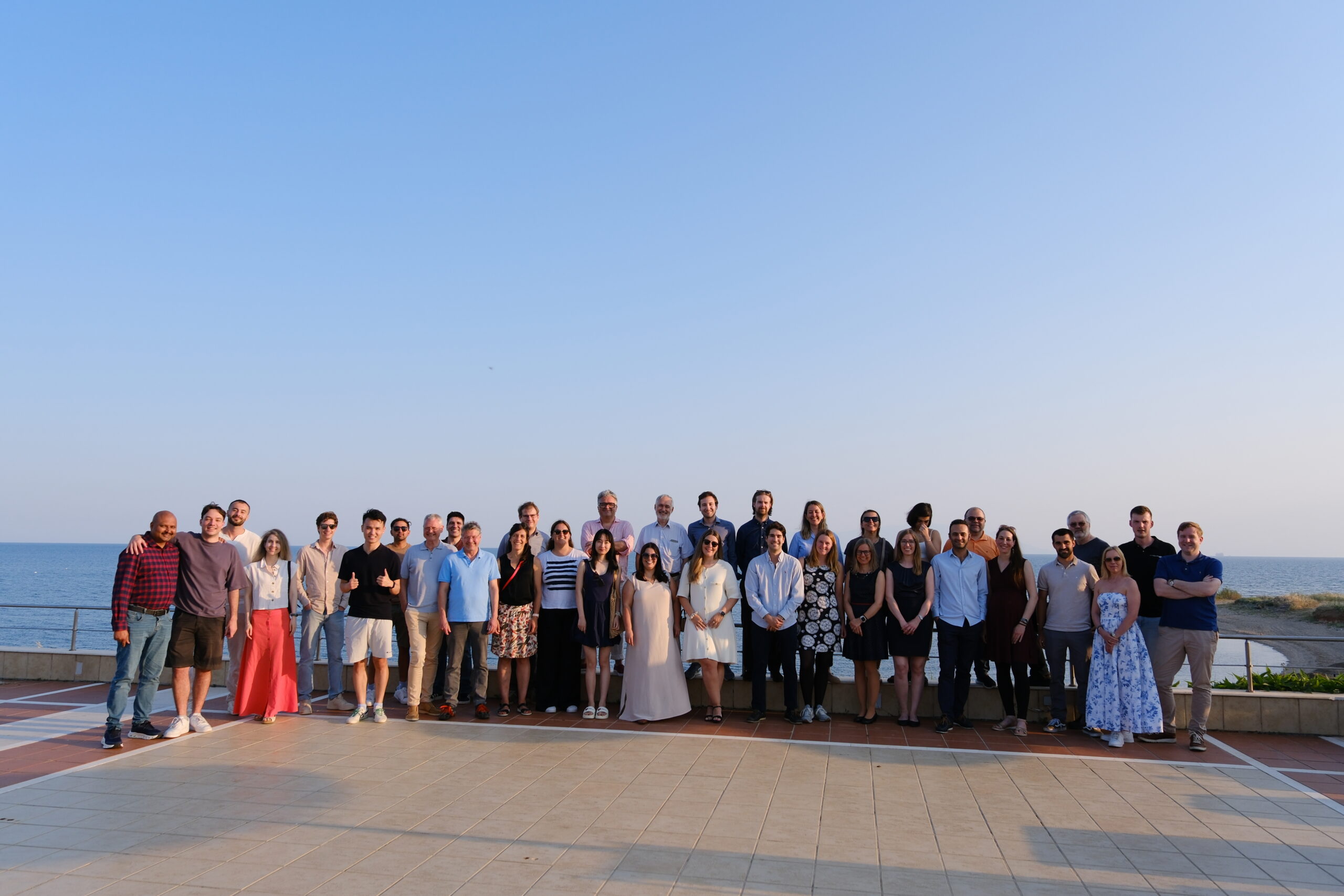
June 19–20, 2025 — Alexandroupolis, Greece
The IS2H4C project, funded by the European Union under the Horizon Europe programme, convened its 4th General Assembly (GA) in Alexandroupolis, Greece. This gathering served a dual purpose: in addition to aligning on internal progress and coordination, the GA also functioned as the official review meeting of the project’s first reporting period, with the participation of an external reviewer.
With 34 partners working across technology, governance, business modelling, and societal engagement, IS2H4C is charting a path to large-scale circular transformation of Europe’s industrial regions through the concept of Hubs4Circularity (H4C). These hubs integrate symbiotic industrial operations, digital infrastructure, and inclusive governance to create more resilient, low-carbon economies.

Reviewing the Full Innovation Chain
Over two packed days, the consortium reviewed each of the project’s active work packages, assessing technical progress, collaborative activities, and upcoming deliverables. The event opened with updates on project management and ethics (WP1 & WP9), before transitioning to communication and dissemination (WP8). This included an overview of stakeholder engagement efforts, communication strategy, and social media milestones, such as the project’s growing LinkedIn community and outreach campaigns.
The consortium then explored progress under WP2, where partners developing key enabling technologies presented results in carbon capture, hydrogen production, and energy/waste valorisation. These innovations are essential to achieving IS2H4C’s goals of reducing energy demand, minimising waste, and cutting CO₂ emissions.
Demonstration Work in Four European Industrial Contexts
A major focus of the GA was the update from WP6: Demonstration and Integration, which coordinates real-world testing in four H4Cs located in Germany, the Netherlands, Türkiye, and the Basque region of Spain. Each hub provided an overview of their deployment progress, current infrastructure, and how they are adapting IS2H4C’s solutions to their specific industrial and regional needs.
These hubs serve as blueprints for replication, demonstrating how circular models can be embedded into existing industrial zones through systemic change.

Framing the Ecosystem: Modelling, Business, Society, and Digital Collaboration
Complementing the demonstration efforts, the GA showcased several core components of the broader IS2H4C strategy:
- Modelling and optimisation (WP4): Development of decision-support tools to simulate material, energy, and information flows, ensuring scalable planning and impact assessment.
- Business and financial models (WP5): This work focuses on circular investment strategies, financial viability, and incentive structures.
- Societal engagement and governance (WP3): Presented engagement approaches that strengthen acceptance and co-creation with local communities and public actors.
- The Digital Collaboration Platform (WP7): This platform will support knowledge-sharing, coordination, and real-time decision-making within and across the hubs.
EU Feedback and Looking Ahead
As the GA also served as the official review meeting, the external reviewers were actively involved in the sessions. The IS2H4C consortium has received constructive feedback, highlighting a systemic approach, diversity of use cases, and strong potential for replicability.
A wrap-up session among work package leaders ensured that the review recommendations would be incorporated into upcoming activities, with a focus on operational coordination, demonstration readiness, and expanding stakeholder impact.