Dear Readers,
Welcome to the third IS2H4C newsletter focused on Technology and Transformation. This edition highlights key steps in turning circular ambition into real-world progress: the launch of our Living Labs starting in Türkiye this December, new insights from carbon capture trials in the German Hub, and a first look at the DigitalH4C alpha platform designed to accelerate industrial symbiosis across regions. We also share recent project visibility and community-building moments across Europe, reinforcing that circular and climate-neutral industry depends on both innovative technologies and the enabling social, regulatory, and collaborative conditions around them.
In Focus: Technology and Transformation
Living Labs Set to Launch: Turkish Hub Kicks Off IS2H4C’s Co-Creation Journey
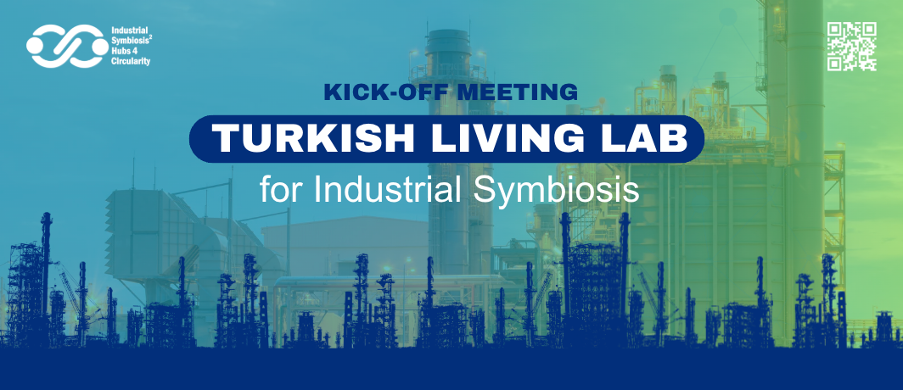
The IS2H4C Living Labs will begin in December, marking a new stage in the project’s co-creation work. The first to launch will be the Turkish Living Lab for Industrial Symbiosis, opening on 3 December 2025.
These Living Labs are central to building Hubs for Circularity: regional ecosystems where industrial, urban, and rural actors jointly design circular solutions. They focus not only on technology, but also on the non-technological factors that determine whether industrial transformation succeeds: regulatory clarity, governance, business models, social acceptance, and meaningful engagement with local communities.
The Turkish Living Lab will open the series with stakeholder workshops addressing the real-world challenges of implementing Industrial Symbiosis (IS) in the Izmir–Manisa region. As part of IS2H4C, it brings together actors from industry, academia, policy, and civil society to examine what it takes for Industrial Symbiosis to succeed beyond technology, tackling regulatory uncertainty, social acceptance barriers, economic constraints, and workforce skills gaps. The kickoff will introduce the regional agenda for 2026–2027 and set the foundation for collaborative solution-building.
The Turkish hub will be followed by the Dutch Hub in January and the German Hub in February 2026, with the Basque hub also launching its Living Labs shortly after.
Participation is by invitation only, gathering key national actors to help shape the future of the circular and climate-neutral industry in the respective regions.
Carbon Capture Trials in German Hub
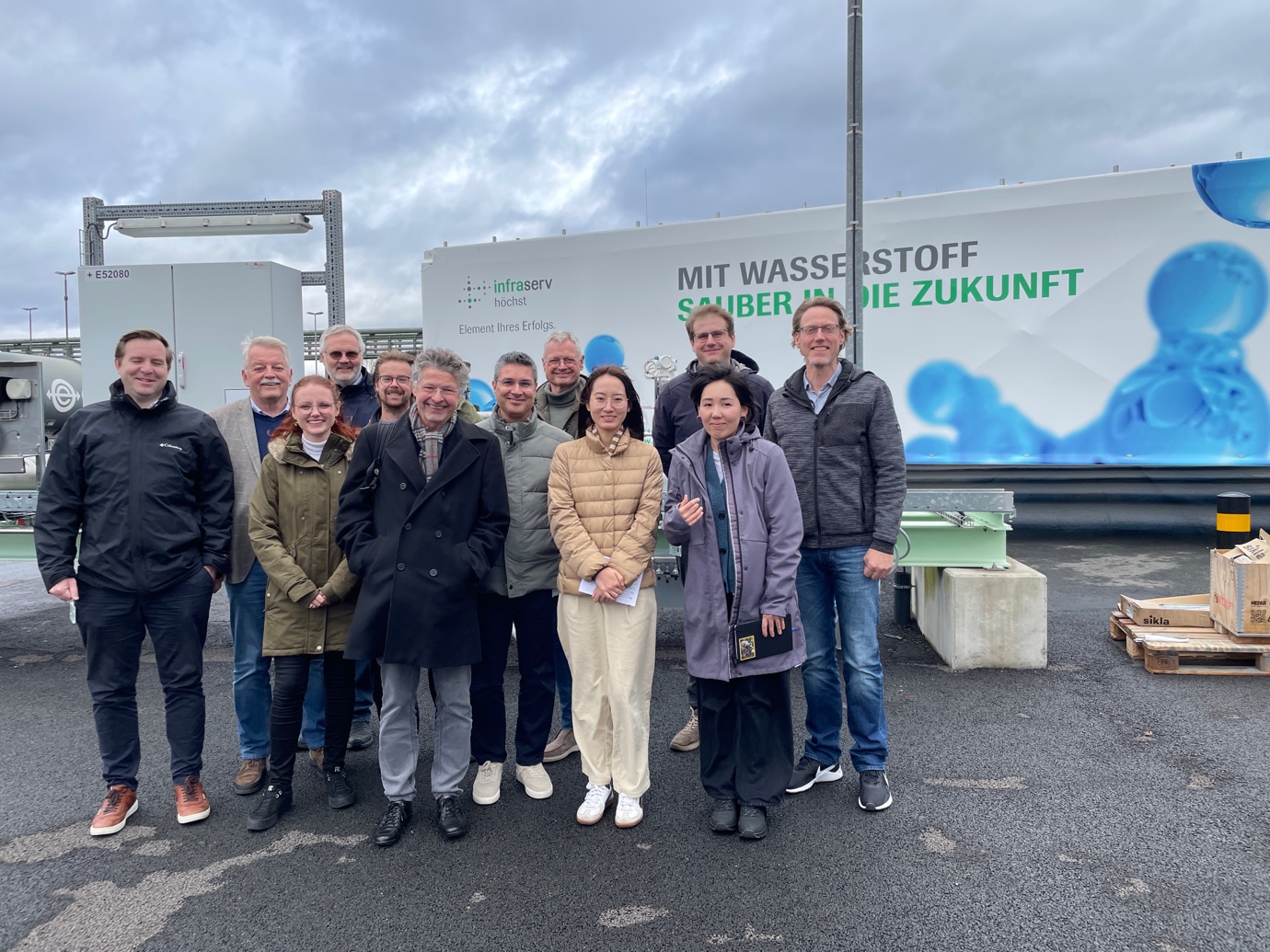
As part of the IS2H4C initiative, a carbon capture pilot campaign was carried out at Industriepark Höchst to evaluate the feasibility of CO₂ separation from industrial flue gases under real operating conditions. The pilot plant was installed at the site’s sewage sludge incineration facility, a location chosen for several reasons. Sewage sludge combustion is a waste treatment process, meaning its CO₂ emissions cannot simply be avoided. In addition, the fuel burned in the sewage sludge incineration, a mixture of municipal and industrial sewage sludge, contains a significant biogenic fraction, which might be relevant for future utilisation pathways.
Before the campaign, the biogenic share of CO₂ was determined using the carbon-14 method. To prepare for the trials, a detailed carbon capture study was conducted in collaboration with company GEA, evaluating footprint, energy requirements, efficiency, and cost implications of an amine scrubbing system. Based on this, a three-month pilot campaign was planned.
In April 2025, GEAs’ modular pilot unit arrived at Industriepark Höchst, an amin-based carbon capture system housed in a 20-foot container with an additional column structure on top. During the testing phase, a small partial flow of flue gas was extracted from the chimney at the sewage sludge incineration plant and fed into the pilot plant. To separate the CO₂ using amines, the flue gas is brought into contact with an amine-water mixture, which absorbs the CO₂. In a second step, this liquid is heated, allowing the CO₂ to be released and thereby separated from the flue gas.
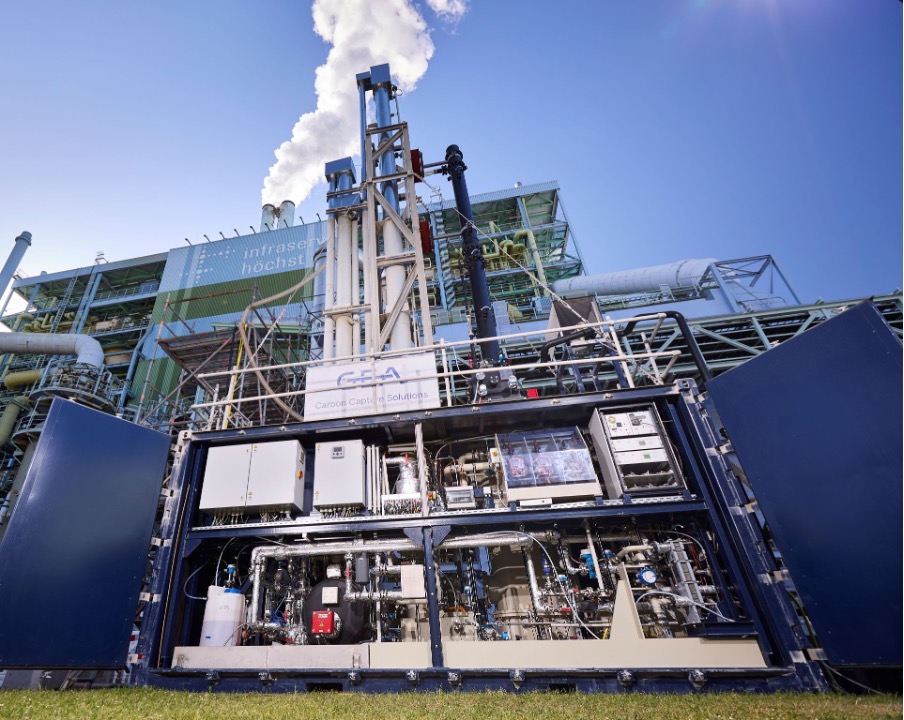
The test phase ran from May to August 2025, with continuous monitoring and data collection of various parameters. Both online and offline analyses were performed to assess the performance of the pilot plant. Key operating variables such as amin flow rate and desorber temperature were systematically varied to understand their impact on capture efficiency and energy consumption. Daily amine samples were taken to track solvent degradation and other chemical parameters. In contrast, gas samples were collected at the beginning and end of the campaign for detailed input/output analysis.
The primary objectives of the pilot were to assess the technical feasibility of amine-based CO₂ capture for this specific application of separating CO₂ from a waste incineration plant and to gain a deeper understanding of the advantages and limitations of the process under real operating conditions. The test campaign thus provided a demonstration of CO₂ separation in a sewage sludge incineration. Beyond evaluating capture efficiency, the campaign aimed to identify the requirements for pre- and post-treatment for the different gas streams, determine the operational complexity, as well as the workload for plant operators. One important aspect is to evaluate the energy requirements, efficiency and costs of a large-scale separation system at a waste incineration plant. These factors are critical for assessing whether carbon capture can be integrated into existing industrial infrastructure in a practical and economically viable way. Currently, all data collected during the three-month test phase is being analysed in detail. The insights gained will serve as a foundation for strategic decisions on future carbon capture projects within the industrial hub and will contribute to the development of solutions for reducing emissions.
A First Look Inside the DigitalH4C Alpha Version
Following the successful completion of the alpha version, Work Package 7 is advancing to the next development stage of the digital Hubs4Circularity platform, expanding its functionalities for data integration, user interaction, and decision-support to facilitate collaboration across industrial ecosystems.
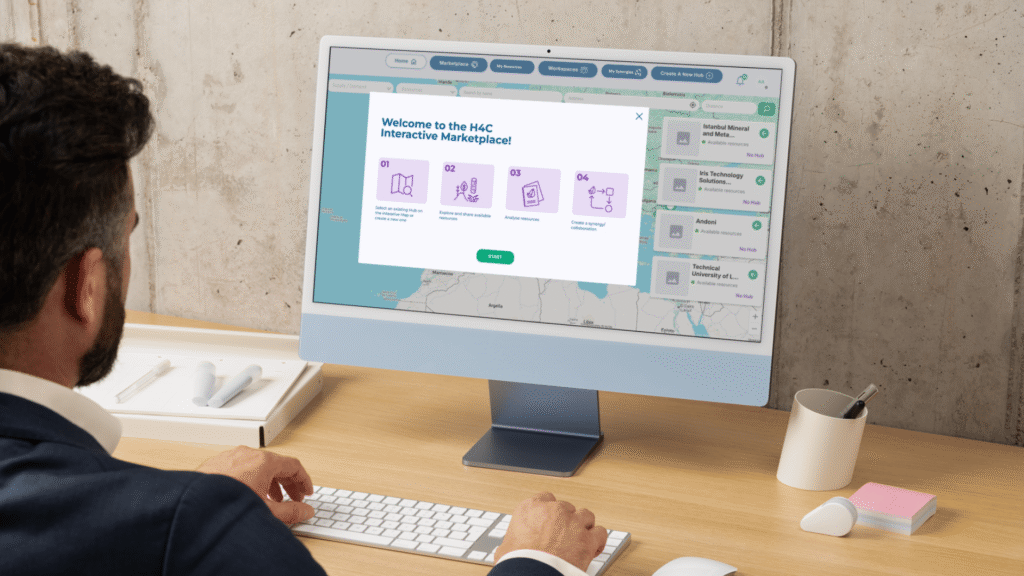
The DigitalH4C alpha version now offers a structured environment designed to support circular collaboration across Europe. It combines standardised data, spatial intelligence, and collaboration tools to help organisations identify and develop industrial symbiosis opportunities more efficiently.
The core feature is the Opportunities Catalogue, where all supply and demand entries are harmonised through detailed fields such as material categories, quantities, pretreatments, pricing, seasonality, waste management methods (D1–D15, R1–R13), and EWC codes. Each entry is geolocated at the NUTS2 level and directly linked to the interactive map, allowing users to assess proximity, logistics, and regional clustering through seamless map–list navigation and distance-based filtering.
A guided onboarding flow ensures consistent information on organisations, including mission, sector, and location, with a distinction between administrator and standard user roles.
To support discovery, the platform includes two matching tools: QuickMatch for targeted filtering and DeepMatch for automated recommendations.
The alpha version also integrates WorkDeck-powered collaboration tools, enabling users to coordinate tasks, share specifications, plan meetings, and formalise synergy agreements within dedicated Workspaces. These private areas help partners or H4C clusters align objectives and manage multi-stakeholder initiatives.
Overall, the DigitalH4C brings together data, mapping, matchmaking, and collaboration into a single workflow reflecting the real stages of symbiosis development: identification, pre-assessment, implementation, monitoring, and post-assessment. Further refinement will continue based on user feedback as the platform evolves.
In Brief: Insights and Updates
Clustering Event in Athens
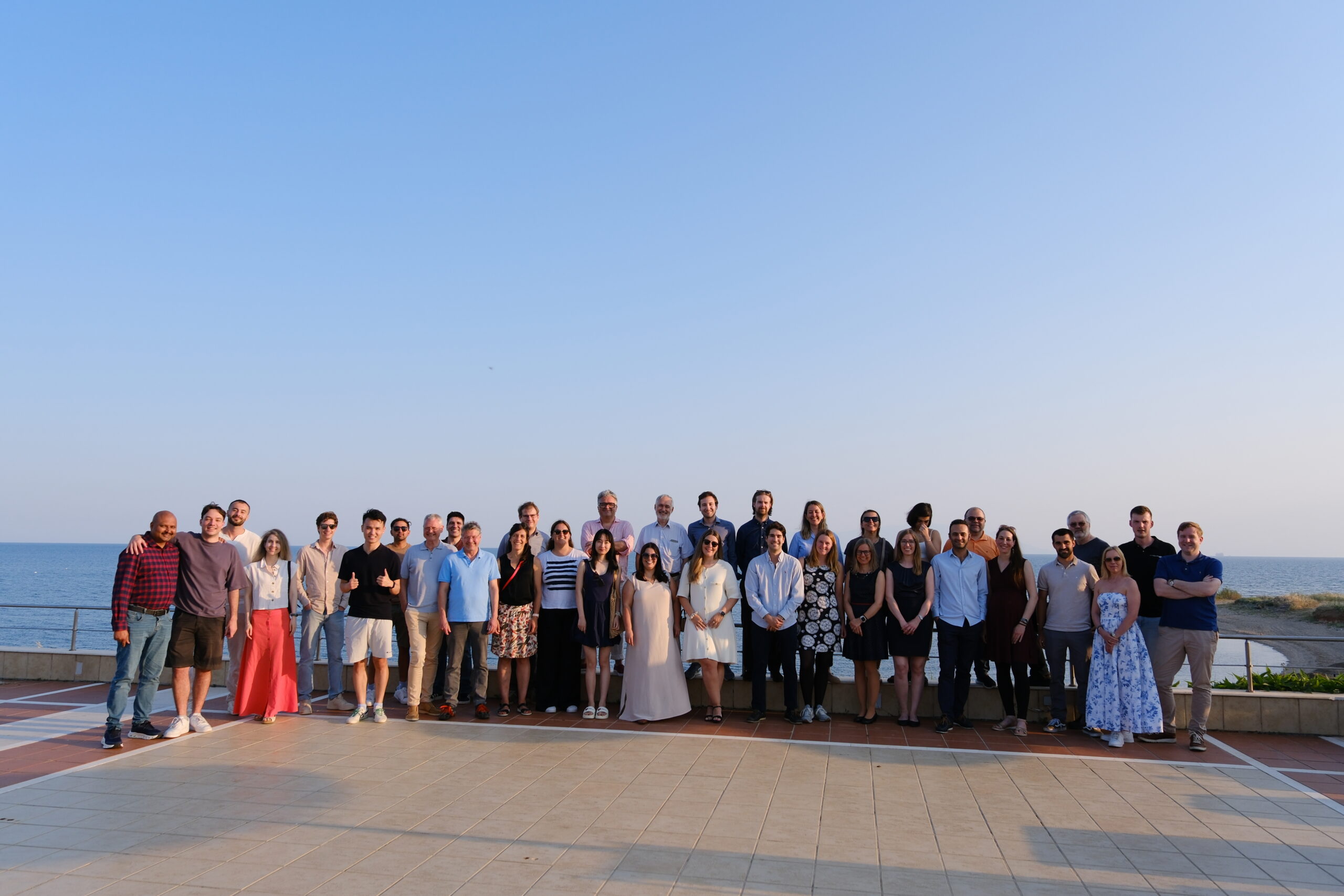
We continued our work with the Hubs4Circularity Community of Practice, joining fellow EU projects in Athens for a focused clustering meeting hosted at NTUA. Our coordinator, Devrim Murat Yazan, presented IS2H4C’s approach and ongoing work, showing how aligned efforts across Horizon Europe projects can accelerate real circular transformation on the ground. We value these exchanges for one reason: collaboration between EU initiatives is not optional; it is essential. More joint work is already in motion.
Expert Panel on Social Dimensions of Industrial Symbiosis
On 26 November 2025, IS2H4C hosted an online Expert Panel Discussion exploring the societal, regulatory, and workforce dimensions of sustainable industrial symbiosis. The session brought together researchers, industry representatives, and policymakers to discuss how Europe’s shift to a circular economy depends not only on technology but also on people, trust, and governance. Key themes included societal engagement, barriers and enablers of systemic change, and policy frameworks for industrial transformation. The discussion contributed to IS2H4C’s broader effort to bridge technological innovation with social acceptance and institutional readiness for Hubs for Circularity.
IS2H4C at Enlit Europe 2025
The IS2H4C project was featured at Enlit Europe 2025, represented by the Basque Energy Cluster in the EU Project Zone. The project team showcased how industrial symbiosis is evolving into Hubs for Circularity, presenting IS2H4C’s vision for sustainable and interconnected industrial ecosystems. Visitors engaged with the project’s stand, attended the pitch session, and discovered IS2H4C’s work through dedicated visibility on the Enlit Europe website, connecting with key actors driving Europe’s circular industrial transformation.
Read the Project Zone article
Listen to the podcast episode
From Industrial Clusters to Circular Hubs
Our Project Coordinator, Dr Devrim Yazan (University of Twente), was featured in Sustainable Energy Insight discussing how IS2H4C is turning industrial areas into Hubs for Circularity. The interview outlines the project’s systemic approach to industrial symbiosis and its goal to cut energy use, waste, and emissions across Europe.
Read the full interview.
Crossing Borders Through Circularity – DANCE 2025
On 10 October 2025, the 8th Workshop of the Dutch Academic Network of Circular Economy (DAN-CE) brought together over 80 participants at the University of Twente, co-hosted by Circular Economy Platform Twente (CEP Twente) and the IS2H4C project. Under the theme “Borderless Circular Economy: Cross-sectoral Collaborations,” academics, policymakers, and industry representatives explored how cross-value-chain cooperation can drive systemic circular innovation at the regional level. The programme featured plenary talks on regional transitions in Overijssel, scaling up circular initiatives, and academia-industry-government partnerships, along with breakout sessions on industrial symbiosis, digital tools, finance models, and transdisciplinary research. The event fostered rich exchange and strengthened the network of experts working to make Europe’s circular transition truly borderless.
IS2H4C at the Plastics Summit Global Event 2025
At the Plastics Summit Global Event 2025, KPMG Portugal represented IS2H4C in a roundtable on the non-technological dimensions of Industrial-Urban-Rural Symbiosis (IURS). The discussion addressed implementation challenges, scaling Hubs for Circularity, and advancing green industrial transformation. The event strengthened collaboration with local and international stakeholders committed to the circular economy, energy efficiency, and waste reduction.
2nd International Conference on Circular Economy, Chania
At the 2nd International Conference on Circular Economy in Chania, Greece Technical University of Dortmund presented IS2H4C’s joint research with Karina Maldonado-Mariscal on stakeholder engagement in Hubs for Circularity. Drawing on insights from the four demo hubs in Germany, Spain, the Netherlands, and Türkiye, the presentation emphasised that non-technological enablers- including social acceptance, regulatory clarity, and collaboration – are key to accelerating Europe’s circular transition.
IS2H4C at SDEWES 2025
The SDEWES Conference 2025, a leading global forum on sustainable energy, water, and environmental systems, provided an ideal stage for IS2H4C to showcase its progress. The project presented a poster on MW-HTC gasification of waste as an alternative pathway for hydrogen production in an industrial park, sharing early experimental results. IS2H4C also conducted a short survey to assess awareness of the project, perceived benefits and risks, and barriers to adoption. The participation helped raise visibility, exchange insights, and strengthen connections within the circular innovation community.
Thank you for being part of our journey!
Don’t forget to follow us on social media, and visit our website to stay up to date with our progress!
Warm regards,
The IS2H4C Team